On Saturday evening at the Golden 1 Center in Sacramento, California, the Ultimate Fighting Championship presents UFC Fight Night: Hernandez vs. Rodrigues, a 25-fight card headlined by a middleweight contest between sixth-ranked Anthony Hernandez and 11th-ranked Gregory Rodrigues. The event represents one of the deeper slates of the calendar year for mixed martial arts daily fantasy sports, featuring a broad distribution of salaries, ownership projections, and finish volatility profiles. The analysis below applies the Diamond Life DFS Monte Carlo simulation framework — the MMA GPP Engine — to identify fighters who offer the most advantageous risk-adjusted ceiling potential for guaranteed prize pool tournament construction.
I ran the 26-fighter slate through our Lean MMA Separator-GPP Engine, using only the uploaded data. RST% is treated as authoritative ownership, and the betting columns are used as MMA-specific finish/upside signals. Because the file does not contain historical scoring distributions, the Monte Carlo volatility layer is derived from the slate’s FPTS projections plus win/finish probabilities rather than external statistics.
Slate read
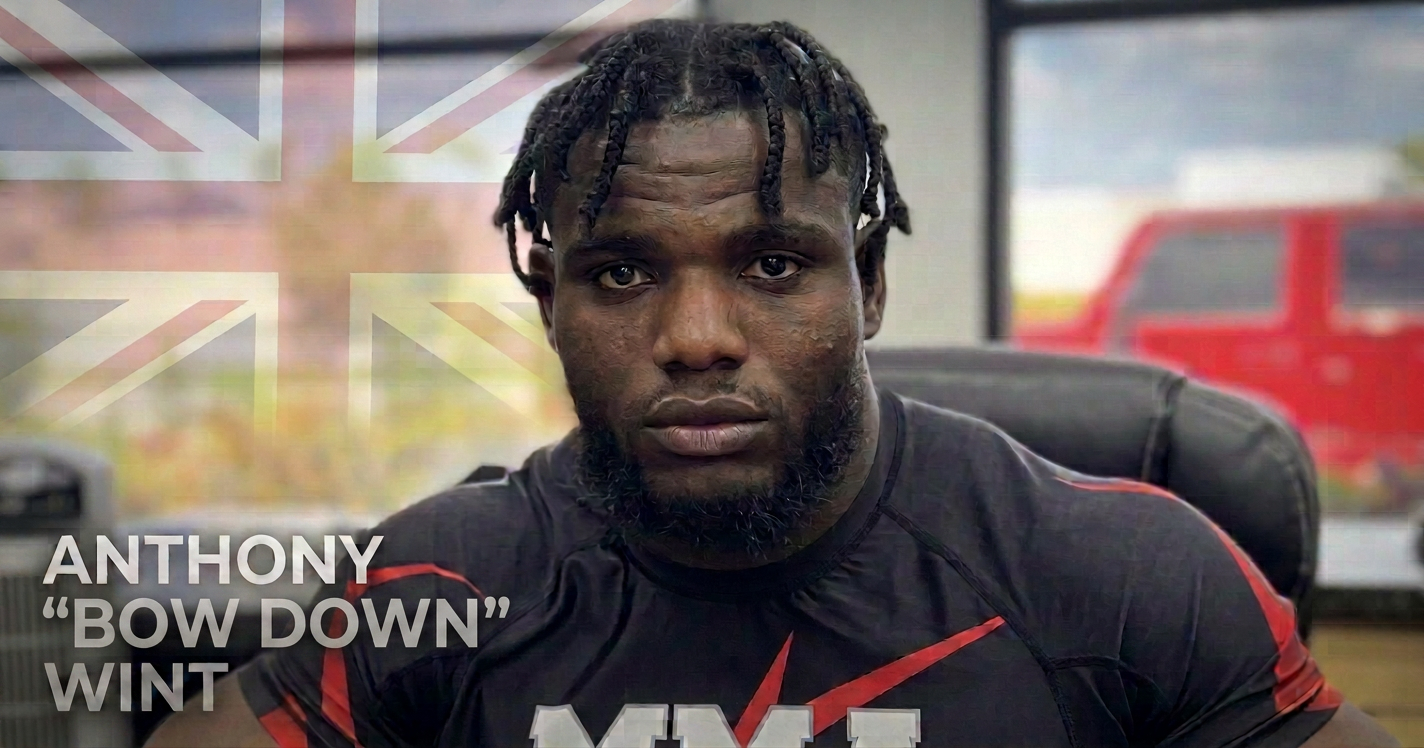
Anthony Wint is the strongest overall play. He leads the slate in projection at 95.77 FPTS, while carrying only 17.2% ownership, and his betting profile is exactly what we want for DFS ceiling: -1050 moneyline, -900 Distance-No, -350 KO. The model produced roughly 169 P95 / 223 P99, the highest SACP on the slate at 173.2, and the highest Tail Leverage score at 46.0. The salary is expensive at $9,900, but his combination of win certainty and early-finish access is unusually strong. For SE, I would be very comfortable treating Wint as the primary anchor.
Marcio Barbosa is nearly tied with Wint from a tournament perspective. His raw projection is slightly lower at 92.42, but the -900 moneyline, -1200 fight-doesn’t-go-distance line and -500 KO number give him enormous right-tail access. He lands at approximately 164 P95 / 216 P99, 167.9 SACP, and 45.4 Tail Leverage at only 16.6% ownership. Wint/Barbosa are clearly Tier 1 for me.
Lerryan Douglas is the salary-adjusted alternative to the two monsters. At $9,300 and 16.7% ownership, he still carries a 92.72 projection with a -395 win line and -200 KO number. His model ceiling is roughly 161 P95 / 209 P99, giving him the No. 3 SACP and Tail Leverage combination on the slate. If paying $9,800-$9,900 creates too much lineup strain, Douglas is the first fighter I would drop down to.
Best separator
The fighter who jumps out most strongly here is Jackson McVey — $8,700, 12.9% RST.
He isn’t near the top of the slate in median projection at 76.79, but the model gives him approximately 131 P95 / 167 P99 and a 40.5 Tail Leverage score, which is actually 4th best on the entire slate. That’s tremendous relative to his ownership and salary.
That makes McVey the cleanest classic Diamond Life separator: you’re not sacrificing access to a meaningful tournament score merely to get different.
Gauge Young is another excellent separator at $8,300 / 12.4% ownership. His 74.69 projection translates to about 123 P95 / 154 P99, while his Tail Leverage reaches 38.5. He doesn’t have McVey’s absolute ceiling, but the salary relief is valuable.
And the more aggressive separator is Kennedy Nzechukwu — $7,800 / 10.5%. Despite only a 60.74 median projection, his volatility and finish environment push him to roughly 110 P95 / 145 P99 and a 38.2 Tail Leverage score. He is considerably more fragile than McVey, but he gives you actual lineup-building leverage.
Midrange
My preferred order through the midrange is:
| Fighter | Salary | RST% | P95 | P99 | SACP | Tail Lev. |
|---|---|---|---|---|---|---|
| Jackson McVey | $8,700 | 12.9% | 130.8 | 167.4 | 133.0 | 40.5 |
| Shamil Gaziev | $8,400 | 14.3% | 132.4 | 167.9 | 134.4 | 38.8 |
| Gauge Young | $8,300 | 12.4% | 123.2 | 154.4 | 124.7 | 38.5 |
| Vitor Petrino | $8,500 | 15.1% | 135.6 | 170.6 | 137.4 | 38.5 |
| Nasrat Haqparast | $8,200 | 14.3% | 121.4 | 149.4 | 122.6 | 35.1 |
I especially like Petrino if we want more raw ceiling and McVey if we prioritize ownership-adjusted tournament upside.
Chalk I would be careful with
Serghei Spivac is the biggest ownership red flag in the file. He is projected for only 55.23 FPTS at $7,700, yet carries 24.1% RST, easily the highest ownership on the slate.
The ceiling itself isn’t nonexistent—about 97 P95 / 127 P99—but his 22.2 Tail Leverage is dramatically below the best alternatives around him. He could certainly be useful if the salary construction demands it, but from a pure small-field GPP standpoint he is the clearest candidate where the field appears to be paying a premium in ownership.
Anthony Hernandez is less concerning but noteworthy: 19.5% RST is high relative to the alternatives. His ceiling is legitimate—about 138 P95 / 179 P99—so I would classify him as good chalk rather than bad chalk.
Cheap fighters
There is an important distinction at the bottom. Terrance Chatman and Ryan Kuse show elevated mathematical Tail Leverage solely because they are 1.5% and 1.7% owned, but their absolute ceilings remain extremely low: approximately 42-43 P99. I would not mistake ownership leverage for tournament-winning upside.
The genuinely more playable salary-saving range starts higher:
Kennedy Nzechukwu ($7,800) is easily my favorite cheaper fighter, followed by Chris Padilla ($8,000) and Stan Dorsainvil ($7,900). If forced beneath $7,500, I don’t see anything remotely as attractive; the raw ceiling falls considerably.
My current SE / small-field hierarchy
Tier 1 — Elite ceiling anchors: Anthony Wint, Marcio Barbosa, Lerryan Douglas.
Tier 2 — Strong tournament pieces: Shanelle Dyer, Vitor Petrino, Jackson McVey, Shamil Gaziev.
Tier 3 — Useful secondary pieces: Reinier de Ridder, Mason Jones, Gauge Young, Anthony Hernandez, Nasrat Haqparast.
Best separator: Jackson McVey
Best salary-saving separator: Kennedy Nzechukwu
Best pure ceiling play: Anthony Wint
Closest alternative to Wint: Marcio Barbosa
Ownership fade/underweight candidate: Serghei Spivac
The central strategic observation on this slate is that it is not necessary to select low‑quality, minimally projected fighters solely because they are expected to be under‑represented in the field. McVey, Gauge Young, and Nzechukwu already offer substantial differentiation in projected roster percentages while preserving credible high-end outcome potential. This structure creates a straightforward framework for pairing one or two top-tier favorites with these differentiated options, achieving effective ownership leverage without resorting to purely speculative, low-probability selections. Key ownership and roster-construction takeaways:
| Concept | Implication | Practical Lineup Effect |
|---|---|---|
| Avoiding low-quality, low-ownership fighters | Leverage can be obtained without sacrificing baseline projection | Reduces reliance on volatile, low-probability outcomes |
| Using McVey, Gauge Young, and Nzechukwu as differentiators | These fighters provide meaningful ownership separation | Lineups remain unique while preserving realistic paths to top scores |
| Pairing differentiated fighters with elite favorites | Allows concentration of salary and projection in high-ceiling pieces | Supports balanced builds that are both competitive and distinct |
| Avoiding “pure punt” selections | Limits exposure to fighters dependent on highly unlikely scenarios | Improves overall lineup stability while maintaining leverage |


Leave a comment