
Diamond Life NBA DFS Solver — Complete Slate Edge Report
November 12, 2026 | Monte Carlo + SACP + XVO v3.1 + Vegas Environment + Ownership Leverage
The strongest tournament opportunities from our analysis are Cade Cunningham’s slate-leading ceiling, Cooper Flagg’s exceptionally low ownership, Daniss Jenkins’ salary-adjusted upside, and the potential for DET–WAS to outperform its Vegas ranking.
Our goal is not simply to roster the best projected players. It’s to identify the combinations of ceiling, salary, game environment and ownership that give us the greatest chance to separate from the field.
1. Best overall ceiling plays
| Rank | Player | Salary | SACP | P99 | RST% |
|---|---|---|---|---|---|
| 1 | Cade Cunningham | $9,600 | 73.3 | — | 20.9% |
| 2 | LaMelo Ball | $8,200 | 70.3 | 82.6 | 27.3% |
| 3 | Cooper Flagg | $10,100 | 67.6 | 80.3 | 7.5% |
| 4 | Anthony Davis | $9,000 | 65.5 | — | 32.8% |
| 5 | Devin Booker | $8,200 | 61.4 | — | 36.5% |
| 6 | Tyrese Maxey | $8,600 | 60.4 | — | 16.2% |
| 7 | Kyrie Irving | $7,600 | 59.0 | 69.6 | 33.9% |
| 8 | Jaylen Brown | $8,100 | 57.5 | — | 40.3% |
P99 values shown only where established in the preceding solver analysis.
My ceiling priorities: Cunningham for raw upside, Flagg for ownership leverage, LaMelo for salary-adjusted elite ceiling, and Maxey as a lower-owned alternative to more popular guards.
2. Best values — ceiling per salary dollar
Daniss Jenkins — $5,000
7.3% owned · 52.5 SACP · 94.9 XVO
The strongest combination of salary relief, ceiling and ownership separation.
Top value
Kevin Huerter — $3,900
24.6% owned · 41.7 SACP · 94.9 XVO
Excellent salary efficiency, but more popular than the strongest leverage values.
Rudy Gobert — $5,800
15.9% owned · 50.5 SACP · 94.5 XVO
Strong midrange ceiling with manageable projected ownership.
Jonathan Kuminga — $6,200
10.0% owned · 50.7 SACP · 94.2 XVO
One of the best opportunities to gain leverage without sacrificing significant ceiling.
Jakob Poeltl — $5,500
12.1% owned · 44.2 SACP · 93.9 XVO
A useful salary-saving center option for balanced tournament builds.
3. Best sleepers and low-owned tournament separators
These are the players I would examine most closely for GPP differentiation.
| Player | Salary | SACP | Ownership | Edge |
|---|---|---|---|---|
| Cooper Flagg | $10,100 | 67.6 | 7.5% | Elite ceiling at low ownership |
| Daniss Jenkins | $5,000 | 52.5 | 7.3% | Salary-adjusted upside |
| Kyshawn George | — | 48.1 | 4.0% | Deep tournament leverage |
| Moussa Diabate | $5,600 | 44.1 | 4.7% | Low-owned frontcourt upside |
| Miles Bridges | — | 47.2 | 4.1% | Contrarian game exposure |
| Jonathan Kuminga | $6,200 | 50.7 | 10.0% | Midrange separator |
| Immanuel Quickley | — | 48.4 | 10.1% | Ownership pivot |
My favorite sleeper is Jenkins. His combination of a 52.5 SACP, $5,000 salary and 7.3% ownership is difficult to ignore.
For large-field MME, George and Diabate are particularly interesting because their projected ownership is below 5%. Their playing time and roles need confirmation before aggressive exposure.
4. Best game environments
DAL–MIN
226.0 O/U
Highest-total game · Primary ceiling environment
Flagg, LaMelo, Kyrie, Gobert and Kuminga all offer strong individual solver outcomes. This is the leading game for exploring correlated upside, subject to roster verification.
DET–WAS
221.0 O/U
Best ownership-adjusted opportunity
Cunningham leads the slate in ceiling, while Jenkins and George create potentially valuable low-owned paths. This is the environment I would prioritize above its raw Vegas ranking.
PHI–TOR
224.0 O/U
Best selective pivot environment
Maxey and Quickley offer more attractive ownership profiles than some of the popular alternatives. Prefer targeted exposure over blindly stacking.
CHA–PHX
214.5 O/U
Contrarian one-off environment
Booker has strong raw ceiling, while Bridges and Diabate offer much lower ownership. Favor selective pieces rather than full-game exposure.
5. Most important ownership inefficiencies
Ceiling vs. projected ownership
Players higher and farther left offer more ceiling at lower ownership. Bubble sizes are uniform.
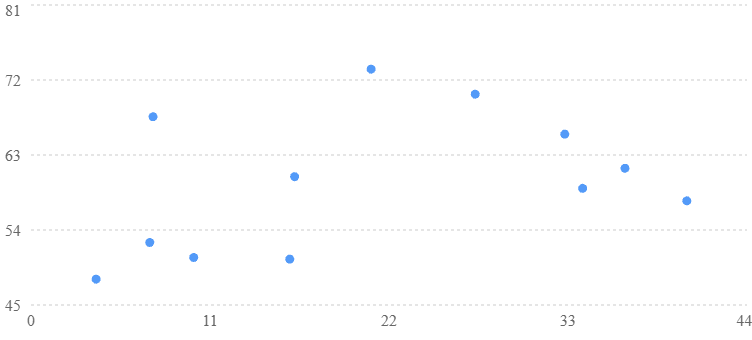
The most interesting differences:
- Flagg versus Anthony Davis: Flagg has only 2.1 fewer SACP points but 25.3 percentage points less projected ownership.
- Maxey versus Booker: Maxey sacrifices only 1.0 SACP point while carrying 20.3 percentage points less ownership.
- Jenkins versus Huerter: Jenkins costs $1,100 more but offers 10.8 additional SACP points at much lower ownership.
- Cunningham versus LaMelo: Cunningham offers 3.0 additional SACP points at 6.4 percentage points less ownership, although he costs $1,400 more.
These differences are the clearest starting points for lineup opportunity-cost analysis.
6. Chalk to challenge
I would not automatically fade these players, but they require stronger lineup-level justification.
| Player | RST% | Concern |
|---|---|---|
| Jaylen Brown | 40.3% | High ownership for his relative ceiling |
| Devin Booker | 36.5% | Strong player, but ownership limits separation |
| Kyrie Irving | 33.9% | Flagg and other alternatives offer leverage |
| Anthony Davis | 32.8% | Flagg has comparable ceiling at far less ownership |
| RJ Barrett | 30.1% | Quickley offers a lower-owned alternative |
The key is to avoid replacing strong chalk with weak players merely because they are unpopular. The pivot must preserve enough ceiling to justify the ownership savings.
7. Recommended tournament approach
Single-entry core
Cunningham
Gobert
Maxey
This provides an elite ceiling anchor, a midrange value and another high-upside guard with relatively modest ownership.
3-Max leverage core
Flagg
Jenkins
Kuminga
This construction prioritizes ownership-adjusted ceiling and creates room for differentiated roster combinations.
Large-field MME core
Flagg
Jenkins
George
Diabate
Higher variance and greater dependence on playing-time assumptions, but potentially meaningful separation if the low-owned players reach their ceilings.
These are exploratory cores, not roster-validated lineups or prescribed exposure percentages.
8. Five strongest edges from the entire analysis
01
Flagg is the premium leverage opportunity.
A 67.6 SACP and 7.5% ownership provide the strongest high-end combination of ceiling and differentiation.
02
Jenkins is the salary-adjusted separator.
His 52.5 SACP at $5,000 can create a meaningful advantage over more popular value options.
03
DET–WAS deserves elevated tournament attention.
A lower total than DAL–MIN doesn’t eliminate the possibility of a superior fantasy ceiling environment, especially with Cunningham leading the slate.
04
Maxey offers a strong ownership pivot.
His 60.4 SACP at 16.2% ownership compares favorably with several more popular stars.
05
Midrange leverage may be more useful than extreme salary punts.
Gobert and Kuminga offer strong ceilings without requiring the same salary investment as elite stars.
Final Diamond Life priority board
| Category | First choice | Alternative |
|---|---|---|
| Highest raw ceiling | Cade Cunningham | LaMelo Ball |
| Premium leverage | Cooper Flagg | Tyrese Maxey |
| Best value | Daniss Jenkins | Kevin Huerter |
| Midrange upside | Jonathan Kuminga | Rudy Gobert |
| Deep sleeper | Kyshawn George | Moussa Diabate |
| Best game stack | DAL–MIN | DET–WAS |
| Best contrarian environment | DET–WAS | PHI–TOR |
| Chalk to reconsider | Jaylen Brown | Devin Booker |
Important qualification: The uploaded slate contains questionable team assignments, including LaMelo Ball listed with Minnesota and Jaylen Brown with Philadelphia. The Vegas totals and solver outputs above are from the supplied data, not independently validated live lines or injuries. Those discrepancies must be resolved before treating any game stacks or correlated lineup cores as actionable.
Bottom line: Assuming the underlying slate data is corrected and the player roles hold, the most compelling tournament direction is to build around Cunningham’s absolute ceiling, Flagg’s ownership discount, Jenkins’ value, and selective exposure to the DET–WAS environment. That combination targets the precise advantage our Diamond Life system is designed to uncover: high-end outcomes the field may be underestimating.


Leave a Reply