Diamond Life NBA DFS Solver — Complete Slate Edge Report
November 6, 2026 | NBA DFS | SACP v3.2 + XVO v3.1 + Vegas + Ownership Leverage
Our full NBA analysis points toward one major tournament advantage: the best opportunities aren’t necessarily in the highest-scoring games. They’re where the solver identifies exceptional ceiling outcomes that the field may be underestimating.
Combining our Monte Carlo distributions, SACP, XVO, Vegas totals, and ownership projections produces five actionable areas: premium anchors, contrarian spend-ups, inexpensive upside, selective game stacking, and late-swap flexibility.
1. Best ceiling plays — Tournament anchors
| Rank | Player | Salary | SACP | Own. |
|---|---|---|---|---|
| 1 | Shai Gilgeous-Alexander | $10,200 | 87.8 | 16.9% |
| 2 | Jalen Johnson | $9,700 | 77.2 | 7.6% |
| 3 | Jayson Tatum | $10,000 | 74.3 | 25.1% |
| 4 | Cooper Flagg | $9,900 | 71.7 | 4.0% |
| 5 | LaMelo Ball | $8,200 | 70.5 | 16.0% |
| 6 | Anthony Davis | $8,600 | 70.5 | 15.7% |
| 7 | Scottie Barnes | $8,800 | 69.5 | 13.3% |
| 8 | Joel Embiid | $8,700 | 69.1 | 15.2% |
| 9 | Donovan Mitchell | $8,300 | 66.5 | 15.2% |
| 10 | Kyrie Irving | $7,400 | 66.5 | 22.1% |
Rankings reflect the supplied solver output. Player-team assignments and current availability require verification.
The three premium anchors I favor
Gilgeous-Alexander v NBA překonal rekord Chamberlaina a dovedl Oklahomu k výhře – Sport.cz
Shai Gilgeous-Alexander — Best raw ceiling
87.8 SACP
85.6 XVO
The highest modeled ceiling on the slate. Shai’s 10.6-point SACP advantage over Jalen Johnson supports prioritizing him when salary permits. Strongest fit: single-entry and balanced tournament constructions.
Stephon Castle, Jalen Johnson Named Players Of The Week | Hoops Rumors
Jalen Johnson — Best premium leverage
77.2 SACP
88.8 XVO
Only 7.6% projected ownership in a 229.5-total environment. His combination of elite ceiling and reduced popularity makes him one of my favorite tournament anchors.
Cooper Flagg’s career-high 35 points helps Mavericks snap skid with win over Clippers
Cooper Flagg — Best contrarian spend-up
71.7 SACP
89.1 XVO
At 4% ownership, Flagg creates a meaningful alternative to more popular premium players. A particularly interesting large-field tournament play.
2. Best values — Salary-adjusted upside
The solver identifies several players who offer strong ceiling potential relative to salary.
| Player | Salary | SACP/$1K | Own. | Role |
|---|---|---|---|---|
| Ryan Kalkbrenner | $3,900 | 9.3 | 1.4% | Deep-value upside |
| Kenrich Williams | $4,400 | 9.1 | 9.4% | Midrange salary relief |
| Trey Lyles | $3,400 | 9.0 | 6.6% | Low-cost tournament value |
| Myles Turner | $4,900 | 8.9 | 8.8% | Center value |
| Rudy Gobert | $5,500 | 8.9 | 9.3% | Rebounding ceiling |
| Ja’Kobe Walter | $5,000 | 8.8 | 4.8% | Lower-owned value |
| Kyshawn George | $5,800 | 8.8 | 2.8% | Midrange leverage |
| Tidjane Salaun | $3,100 | 8.8 | 1.0% | Minimum-cost upside |
My favorite salary-saving concept: Pair a premium ceiling anchor with one or two inexpensive players whose modeled upside substantially exceeds their salary expectations.
However, the cheapest players carry meaningful minutes risk. Kalkbrenner, Lyles, and Salaun should be treated as conditional plays until their roles are confirmed.
3. Best sleepers and ownership pivots
Keyonte George
89.2 XVO
3.2% ownership · DAL–UTA
One of the most interesting under-owned players in the model. His 62.1 tail-leverage score reinforces the case for selective exposure to DAL–UTA.
Cameron Boozer
3.2% owned
An ownership-based sleeper flagged in the prior analysis. Verify his player assignment and availability before treating the solver’s result as actionable.
Brandon Miller
3.2% owned
A potential contrarian one-off in BOS–CHA. The game’s low total limits broad stacking appeal, but does not eliminate individual ceiling outcomes.
Kyshawn George
2.8% owned
His 8.8 SACP per $1,000 creates a useful combination of salary-adjusted upside and low popularity.
4. Best game environments — Vegas versus solver
Vegas scoring expectation vs. aggregate solver ceiling
Upper-left games have relatively more aggregate SACP for their Vegas total. Totals are affected by eligible player count.
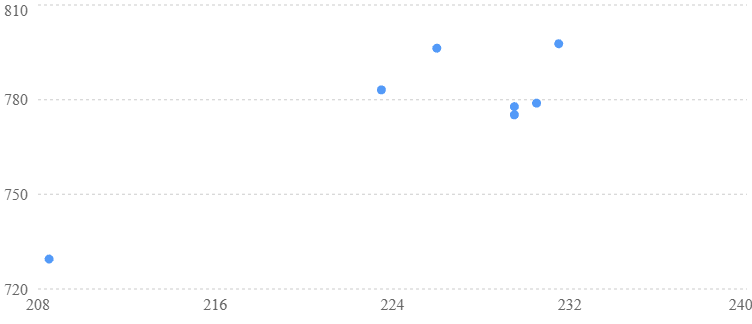
Game-by-game tournament priorities
| Game | Vegas | Strategic priority |
|---|---|---|
| CLE–PHI | 231.5 | Best high-total ceiling environment |
| DAL–UTA | 226.0 | Best selective leverage opportunity |
| MEM–OKC | 223.5 | Premium anchor and contrarian upside |
| MIN–NOP | 230.5 | Strong concentrated fantasy potential |
| ATL–WAS | 229.5 | Jalen Johnson leverage |
| MIL–TOR | 229.5 | Secondary ceiling and value |
| BOS–CHA | 208.5 | Selective one-offs only |
Three particularly interesting findings emerge.
DAL–UTA is the strongest game-level ownership opportunity. Its aggregate SACP of 796.3 is almost identical to CLE–PHI’s 797.7, despite a lower Vegas total and lower average player ownership. Because DAL–UTA has more eligible players, the advantage is better expressed through carefully selected individuals rather than blindly stacking the entire game.
MEM–OKC is more attractive than its 223.5 total suggests. Shai’s elite individual ceiling, combined with the game’s low average projected ownership, creates an opportunity to build around a premium outcome without chasing the highest-total matchup.
ATL–WAS offers concentrated leverage. Jalen Johnson is the clearest reason to prioritize this game. We don’t need every player in the matchup to succeed for that decision to pay off.
5. Fragile chalk and opportunity cost
The most important potential ownership fade is not necessarily a bad player. It is a player whose popularity is high relative to comparable alternatives.
Jayson Tatum has a 74.3 SACP at 25.1% ownership, compared with Jalen Johnson’s 77.2 SACP at 7.6%. Johnson offers 2.9 more modeled SACP, costs $300 less, and carries 17.5 percentage points less ownership.
That is one of the clearest opportunity-cost advantages in the slate.
Kyrie Irving, at 22.1% ownership, offers strong salary-adjusted ceiling but is more popular than several alternatives. He remains viable, especially at $7,400, but lineups featuring him should seek differentiation elsewhere.
6. Building around the findings
Tournament construction blueprint
Single-entry3-MaxMME
Prioritize ceiling with one meaningful ownership advantage.
Anchor candidates: Shai Gilgeous-Alexander or Jalen Johnson.
Secondary options: Scottie Barnes, Joel Embiid, or a validated DAL–UTA play.
Salary relief: Myles Turner, Rudy Gobert, or another confirmed-minutes value.
Avoid stacking multiple volatile minimum-salary players merely to afford a premium anchor.
7. The late-swap advantage
Late swap can add value when we preserve flexibility in the correct roster slots.
If early players outperform, we can often favor stronger median outcomes in the remaining games. If early players underperform, we can pivot toward lower-owned players with wider upper-tail distributions.
Our best late-swap targets should satisfy three conditions: they have not locked, they retain a credible minutes/usage path to a P95 outcome, and their ownership is low enough to improve the lineup’s ability to separate from the field.
The uploaded analysis does not establish verified tipoff times or live injury changes, so specific late-swap recommendations require an updated slate check.
Final Diamond Life priority board
Best raw ceiling
Shai Gilgeous-Alexander
Best premium leverage
Jalen Johnson
Best contrarian spend-up
Cooper Flagg
Best XVO sleeper
Keyonte George
Best cheap value
Ryan Kalkbrenner
Best high-total game
CLE–PHI
Best selective leverage game
DAL–UTA
Best opportunity-cost pivot
Jalen Johnson over Tatum
The biggest edge: Jalen Johnson’s combination of higher modeled SACP, lower salary, and substantially lower ownership than Jayson Tatum is the clearest premium-player inefficiency. Meanwhile, DAL–UTA and MEM–OKC offer alternatives to simply following the highest Vegas totals.


Leave a Reply