Diamond Life Solves NFL Week 2 Main Slate for a first look: the broad analytical trends from this NFL slate point toward a slate where roster construction and ownership leverage may matter more than simply finding obscure players.
1. QB looks unusually open
There isn’t a dominant QB ownership concentration. Lamar Jackson, Jalen Hurts, Brock Purdy, Jayden Daniels and Drake Maye all have strong simulated ceilings while remaining roughly in the 5–6% ownership neighborhood.
That means we don’t necessarily need to get cute at QB. The slate is giving us access to elite QB ceilings at modest ownership already. Malik Willis at $5,200/3% is the more aggressive salary-leverage route.
Broad implication: I’d rather differentiate through the stack around the QB than automatically force a contrarian quarterback.
2. RB contains the slate’s biggest ownership decision
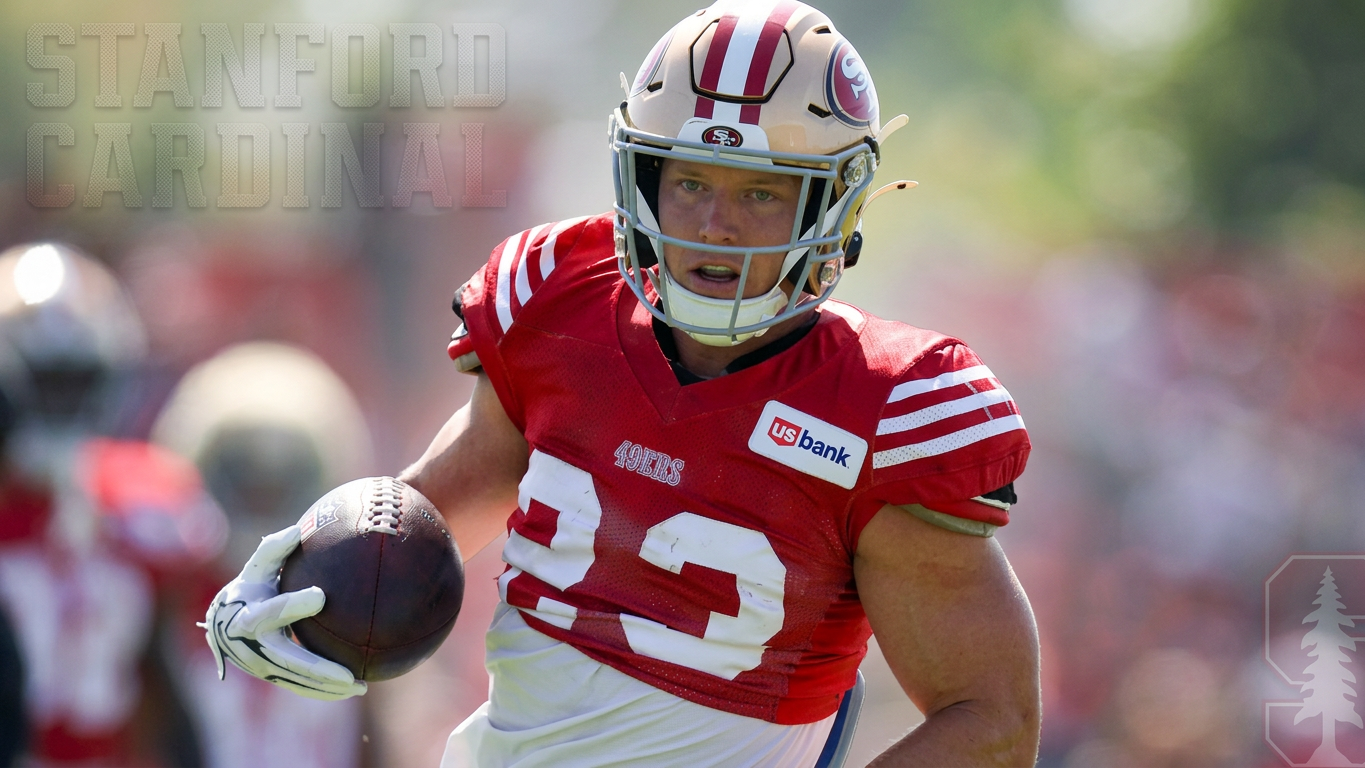
Christian McCaffrey at 57.5% RST is an enormous concentration point.
Compare that with:
| RB | RST% |
|---|---|
| Christian McCaffrey | 57.5% |
| Bijan Robinson | 16.5% |
| Saquon Barkley | 12.5% |
| Derrick Henry | 7.5% |
| De’Von Achane | 6.9% |
| Aaron Jones | 5.5% |
| Jadarian Price | 4.2% |
This is probably the single most important broad GPP trend on the slate.
The field is effectively making a major bet on one RB outcome. Meanwhile, the solver sees substantial right-tail access elsewhere.
This creates two distinct constructions: use CMC and find leverage elsewhere, or use a lower-owned ceiling RB and immediately create significant leverage on a huge percentage of the field.
3. Expensive WR is surprisingly attractive for leverage
This is one of my favorite slate-level observations.
Normally we hunt inexpensive WRs for ownership separation. Here, some established ceiling WRs themselves are relatively low owned:
Justin Jefferson 7.4% → Ja’Marr Chase 7.8% → Chris Olave 4.1%.
That’s important because these aren’t cheap dart throws that need an unlikely outcome. We’re getting legitimate high-end receiving ceilings without corresponding ownership.
That fits our Diamond Life philosophy extremely well: don’t be different just to be different; find great outcomes the field isn’t paying enough attention to.
4. WAS–DAL is the obvious raw game environment
At 50.5 O/U, this game immediately separates itself from the slate.
Dallas has roughly a 27.25 implied total and Washington approximately 23.25.
The interesting part is that Jayden Daniels isn’t prohibitively owned. So unlike some NFL slates where the highest-total game forces us into extremely popular QB stacks, we can attack this environment without necessarily creating an overwhelmingly chalky construction.
The deeper question becomes which pieces of WAS–DAL provide the best right-tail/ownership combination, rather than whether we should consider the game at all.
5. There appear to be overlooked secondary environments
This may ultimately be where we find the biggest stack edges.
The early team-level analytics are pointing toward MIN, NE, JAX, NO and PIT as environments worth investigating relative to how much ownership the field is assigning them.
JAX especially caught my attention. Their aggregate ownership appears very low compared with the amount of simulated upper-tail access available.
That’s exactly the type of discrepancy we want the Right-Tail Separation Engine to investigate rather than simply chasing the highest Vegas totals.
6. Salary doesn’t appear overly restrictive
There are enough viable midrange/value plays that we shouldn’t need to construct lineups around multiple thin punts.
That’s important because it opens a strategy you have used effectively before:
create leverage with inexpensive/midrange players that the solver actually likes → use the savings to buy expensive players/stacks with enormous raw ceilings.
Malik Willis and Jadarian Price are early examples of this concept, but we should identify more before narrowing the pool.
7. The field appears more concentrated at individual players than at QB
That’s a significant structural characteristic.
Rather than saying “I need a 2%-owned QB,” we can potentially roster a very strong 5–7% QB and gain our differentiation through:
RB ownership decisions + low-owned WR1s + secondary stack pieces + unusual bring-backs.
That tends to produce a stronger lineup than sacrificing projection simply for QB ownership.
8. Right-tail analysis should drive this slate
The early data suggest median projection alone won’t tell the story.
There are players with similar median projections but very different ownership and P95/P99 access. That’s exactly where our Solver should separate players.
So for this slate, I’d emphasize:
P95/P99 → SACP → Tail Leverage → salary-adjusted ceiling → correlation
rather than simply ranking FPTS projections.
Overall slate identity
My initial read is that this is not a slate where we need to hunt for ten obscure sleepers.
It’s shaping up more like a “use great plays differently” slate.
The strongest broad construction concept is to take advantage of relatively modest QB ownership, make a deliberate decision on the 57.5%-owned CMC, use overlooked elite WR ceilings such as Jefferson/Chase/Olave, and then identify one under-owned game or team stack with legitimate P95/P99 potential.


Leave a comment