UFC Fight Night: Gamrot vs Salkilld
THREE THINGS THAT STAND OUT:
- Several fighters in the $15–$17 range FD Pricing) possess ceilings comparable to the expensive tier. 2.
- Some of the slate’s better tournament plays are sitting below or around 20% RST.
- There is at least one highly owned fighter whose popularity is not supported particularly well by his upper-tail distribution.
That combination creates an attractive slate for building around separator outcomes rather than simply chasing median projection.
The Top of the Slate
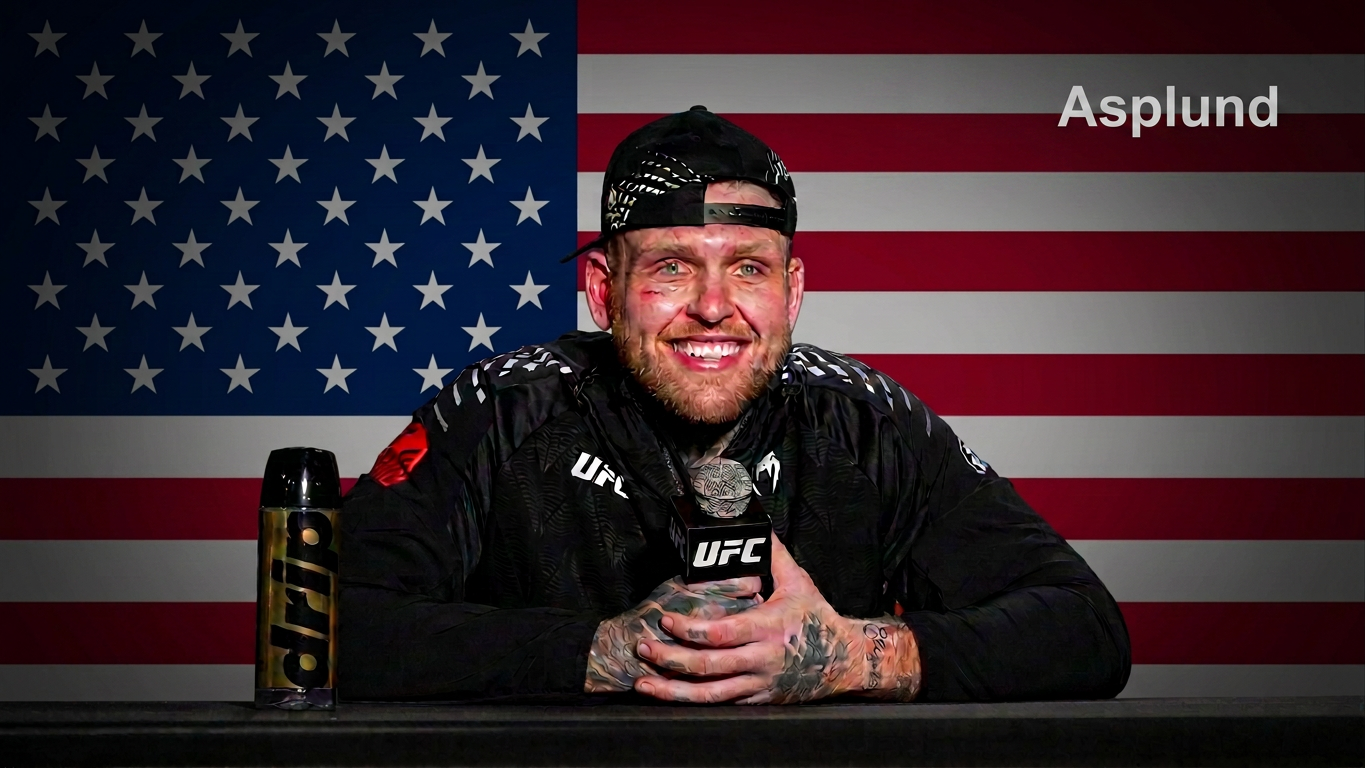
The strongest pure tournament profile belongs to Steven Asplund.
At $17 and 22.1% RST, Asplund isn’t a hidden play, but the field still may not be giving enough credit to his ceiling. His Monte Carlo distribution produced approximately a 157 P90, 171 P95 and 180 P99, while his 170.7 SACP ranks first on the slate.
More importantly, Asplund owns the slate’s strongest modeled probability of reaching the truly valuable 120+ range at roughly 35.5%.
That makes him different from fighters who project well primarily because of their median. Asplund’s distribution continues expanding into the portion of the scoring curve capable of deciding tournaments.
Diamond Life verdict: Core tournament ceiling target.
Diyar Nurgozhay — The Clean Separator
If Asplund owns the strongest overall SACP profile, Diyar Nurgozhay may be the most attractive combination of ceiling, salary and ownership.
Nurgozhay costs $17 but carries only 19.5% RST. His distribution reaches roughly 155 at P90, 167 at P95 and 180 at P99, producing a 168.6 SACP.
That puts his ultimate ceiling in essentially the same neighborhood as the best fighters on the slate without requiring premium salary or premium ownership.
His betting information strengthens the case because there is a legitimate finish-driven path behind the projection rather than the model simply manufacturing variance around an average score.
This is exactly what the Right-Tail Engine is designed to uncover.
We aren’t asking whether Nurgozhay is guaranteed to outperform the more popular fighters.
We’re asking:
If Nurgozhay hits his upper-tail outcome, does the field own him enough?
The solver’s answer is no.
Diamond Life verdict: Priority separator / potential overexposure target.
Louie Sutherland — The Aggressive Separator
One of the most interesting outputs of the entire run is Louie Sutherland at only 13.4% RST.
At $15, Sutherland carries a projection around 86 points, but his simulated distribution expands dramatically:
P90: ~152
P95: ~166
P99: ~180
SACP: ~167
At only 13.4% ownership, that creates one of the largest discrepancies between projected popularity and theoretical tournament ceiling.
There is an important qualification.
The uploaded data does not contain moneyline or finish-method odds for Sutherland. Therefore, his Monte Carlo distribution has less external information anchoring the shape of his outcomes than fighters such as Nurgozhay or Asplund.
That means he shouldn’t automatically be treated as the safest play simply because his numbers rank highly.
Instead, Sutherland becomes something potentially more useful in GPPs:
a high-variance separator whose field ownership is low relative to his projected ceiling.
Diamond Life verdict: Aggressive GPP separator; excellent diversification piece but lower-confidence than the fully market-anchored targets.
Carlos Diego Ferreira — Salary Relief Without Sacrificing Ceiling
Carlos Diego Ferreira is one of my favorite structural pieces on the slate.
At only $15 and approximately 19% RST, Ferreira generated:
P90: ~147
P95: ~159
P99: ~177
SACP: ~162
His modeled probability of reaching 100+ points is approximately 46%.
This matters because salary savings normally require surrendering ceiling.
Ferreira doesn’t force that tradeoff.
He allows us to move down the salary structure while retaining access to an outcome that can compete with significantly more expensive fighters.
That makes Ferreira valuable beyond his individual projection. His salary can potentially unlock stronger combinations elsewhere while still giving the roster a legitimate right-tail outcome from his position.
Diamond Life verdict: Strong salary-adjusted ceiling target.
Manoel Sousa — Premium Ceiling Without Extreme Ownership
Among the spend-up options, Manoel Sousa stands out.
Sousa carries approximately 19.6% RST and produced a distribution around:
Median: ~100
P90: ~148
P95: ~161
P99: ~178
SACP: ~163
His probability of reaching 100+ points approaches 50%.
That is an excellent combination for a premium fighter because we’re getting both a relatively strong central projection and access to a legitimate tournament-winning tail.
Most importantly, Sousa isn’t carrying ownership dramatically higher than the midrange separators.
That makes him one of the more comfortable ways to spend salary.
Diamond Life verdict: Preferred premium/spend-up target.
Alexia Thainara — Quietly Strong Across the Distribution
Alexia Thainara doesn’t create quite the same leverage signal as Nurgozhay or Sutherland, but her overall distribution is extremely healthy.
At $19 and roughly 20.3% ownership, she reaches approximately:
P90: ~146
P95: ~160
P99: ~179
SACP: ~163
Her probability of reaching 100+ sits around 48%.
There isn’t a glaring weakness here.
She’s not dramatically overpriced by ownership, nor is she a massive hidden separator. Instead, she represents a strong tournament fighter whose projection survives examination beyond the median.
Diamond Life verdict: Strong secondary core target.
Miles Johns — Another Under-Owned Tail
Miles Johns creates another interesting leverage situation.
At $15 and only 16.7% RST, Johns produced approximately a 145 P90, 159 P95 and 178 P99.
That is significant upside for his salary and ownership.
Like Sutherland, however, Johns is missing betting-market information in the uploaded dataset. Therefore, his tail carries additional uncertainty.
That changes how I want to use him.
Rather than treating Johns as a foundational fighter, I view him as a portfolio separator whose ceiling warrants exposure when we’re deliberately trying to build away from the field’s most common combinations.
Diamond Life verdict: Secondary low-owned separator.
The Punt That Can Actually Matter
One of the most useful findings is Bruno Lopes.
Lopes costs only $11 and carries approximately 13.7% RST.
His median is not impressive at roughly 58 points.
That’s precisely why his tournament profile is interesting.
His distribution expands to approximately:
P90: ~127
P95: ~141
P99: ~163
This is classic GPP asymmetry.
There is substantial bust risk. We should not pretend otherwise.
But we’re paying $11 and accepting that risk in exchange for an outcome distribution that can occasionally reach scores normally associated with dramatically more expensive fighters.
If Lopes hits 140–160 while carrying sub-15% ownership, the salary savings and raw points can fundamentally alter the slate.
Diamond Life verdict: Preferred boom/bust punt and salary separator.
Understanding Quillan Salkilld
Quillan Salkilld deserves a nuanced interpretation.
At roughly 24.5% RST, he’s one of the more popular fighters on the slate. That would normally cause the Separator Engine to look aggressively for alternatives.
The problem is that Salkilld’s ceiling is legitimate.
His distribution reaches approximately:
P90: ~151
P95: ~164
P99: ~180
SACP: ~166
His modeled probability of scoring 120+ is around 31%.
So this isn’t weak chalk.
The argument against Salkilld is primarily one of price plus ownership, not a lack of upside.
Nurgozhay and Asplund can reach essentially the same right-tail region at $17. Sutherland and Ferreira can also access substantial ceiling for $15.
Therefore, Salkilld is absolutely capable of being optimal when he hits, but he isn’t necessarily the fighter we need to build around at elevated ownership.
Diamond Life verdict: Good chalk, but not irreplaceable chalk.
The Strongest Chalk-Failure Signal
The fighter producing the clearest warning is Guilherme Pat.
Pat carries approximately 26.9% RST — the highest ownership on the slate — yet his right-tail distribution doesn’t remotely separate from the field at the same rate.
His projection is approximately 52 points, with a P95 around 122 and SACP around 127.
Most importantly, his modeled probability of reaching 100+ points is only approximately 13%.
That creates a major tournament question.
If we’re accepting the highest ownership on the slate, what exactly are we being compensated with?
The solver doesn’t see enough upper-tail compensation.
This doesn’t mean Pat cannot win his fight or produce a useful score. It means his ownership requirement appears substantially greater than his probability of producing the type of score that separates a GPP lineup.
And there is a natural alternative.
Bruno Lopes is only around 13.7% owned and also provides extreme salary relief, but Lopes owns the stronger P95/P99 profile.
That creates one of the cleanest failure-path constructions on the slate:
If the field’s cheap chalk fails, a lower-owned punt with a stronger right tail can create enormous separation.
Diamond Life verdict: Strongest initial underweight/fade candidate.
The Premium Tier
The premium fighters aren’t bad plays, but the slate’s salary structure reduces the necessity of forcing them.
Manoel Sousa is my preferred spend-up because his combination of median, ceiling and ownership is strong.
Alexia Thainara follows closely and provides another well-rounded tournament distribution.
Ty Miller also possesses a solid profile, with approximately a 155 P95 and 174 P99.
Yadier Del Valle is particularly interesting because his probability of reaching 100+ is among the strongest on the slate. He profiles more as a high-probability scoring option than an extreme ownership separator.
Then we reach Quillan Salkilld, whose raw ceiling is excellent but whose combination of salary and popularity creates more opportunity cost than the other high-end options.
The takeaway is important:
We don’t necessarily have to pay all the way up to obtain elite right-tail access on this slate.
That is one of the defining characteristics of the entire tournament.
How I Would Attack This Slate
The Diamond Life model strongly favors a barbell approach to ceiling.
Instead of automatically starting with the highest salaries, I want significant exposure to the unusually strong $15–$17 region.
That is where Asplund, Nurgozhay, Ferreira, Sutherland and Johns live.
Several of these fighters possess P95/P99 outcomes that compete directly with the $20+ tier.
That creates salary flexibility without forcing us to sacrifice tournament-winning upside.
From there, fighters such as Sousa and Thainara provide high-quality premium anchors.
And if additional salary relief is required, Lopes offers the type of volatile punt profile that makes sense specifically for GPPs.
Diamond Life Priority Board
Tier 1 — Tournament Core
Steven Asplund — Best overall SACP/right-tail combination.
Diyar Nurgozhay — Favorite clean separator considering salary + ownership + ceiling.
Manoel Sousa — Preferred premium target.
Carlos Diego Ferreira — Excellent salary-adjusted ceiling.
Tier 2 — Separator Pool
Louie Sutherland — Extremely attractive ownership-adjusted tail, but lower model confidence because betting data is absent.
Alexia Thainara — Strong distribution throughout.
Miles Johns — Low-owned $15 tail target with the same data-confidence caveat.
Quillan Salkilld — Strong ceiling even at elevated ownership.
Tier 3 — Boom/Bust Weapon
Bruno Lopes — Preferred cheap volatility play. Weak median but enormous P95/P99 improvement relative to salary and ownership.
Final Slate Thesis
The central Diamond Life thesis for this slate is:
Don’t overpay for ceiling that exists cheaper and at lower ownership elsewhere.
Asplund and Nurgozhay provide premium-level upper tails for $17.
Ferreira provides legitimate tournament ceiling at $15.
Sutherland and Johns offer lower-owned separator paths.
Lopes gives us a cheap, highly volatile way to attack the right tail.
Sousa provides a strong premium anchor without overwhelming ownership.
And Pat presents the clearest opportunity to bet against the field because his 26.9% RST is not supported by a comparably elite upper-tail distribution.
If the popular construction succeeds, we’ll need enough raw ceiling to compete.
But if the slate breaks differently — particularly if the highest-owned value disappoints — the lower-owned midrange and punt tails can generate enormous separation.
That is where the Diamond Life Separator-GPP Engine sees the primary edge:
Asplund for raw tournament ceiling.
Nurgozhay for clean separation.
Sousa for premium stability plus upside.
Ferreira for salary-adjusted ceiling.
Sutherland for aggressive leverage.
Lopes for cheap right-tail volatility.
Pat as the primary ownership-failure candidate.
The slate is not asking us to predict every fight correctly.
It’s asking us to identify which fighters become disproportionately valuable when they hit their best realistic outcomes.
And according to this run, the field appears to be leaving several of those outcomes under-owned.


Leave a comment